Showing posts with label Duino Elegies. Show all posts

Wednesday, August 1, 2012

Ecstasy


Karl O. Knausgaard
A Time to Every Purpose under Heaven
Translated from the Norwegian by James Anderson
London: Portobello Books, 2008.

Ec-stasy is the subject of this big novel. Standing outside. Standing outside of time, of one's own consciousness, of life itself.


When Antinous Bellori, age 11 and lost in the forest, thinks he has found his father (who must be searching for him!) but finds terrible angels fishing in a river instead, they are creatures who stand in or inhabit interstices:

Gingerly he raises his head and looks over the edge. The sight that meets his eyes petrifies him. Two cloaked men are standing motionless on the river bank staring up at him. . . . The two figures stand as immobile as before. But now they’re looking at the water in front of them. One holds a torch in his hand, the other a spear. Both wear chain mail under their cloaks and each has a sword hanging at his side. . . . All he wants is to be in their presence. Without giving a thought to what he’s doing, he gets up and begins to walk slowly down, all the time concealed by the trees and with his eyes fixed on the two figures, who display no sign of having heard him, but stand there still as ever. Halfway down he notices their wings and thinks what has until then been just a vague inkling: there are two angels standing in the river. The rush of fear and happiness which this sends coursing through him is almost unendurable. (10-11)

And so, standing close together, the light flickering across their faces and the bottom of their cloaks trailing in the water, they stand eating the fish. Antinous stares at them spellbound. The teeth that sink into the fish’s flesh, the scales that cling to their chins, the eyeballs that now and then turn up and make them look white and blind. Then they look like statues standing there, for without the life of the eyes the deadness of their faces is emphasised. Each time he sees it, Antinous recoils in fear. They’re dead, he thinks. They’re dead. But then the eyeballs correct themselves, the faces again fill with life, and what a moment before was loathsome in them is now beautiful again. (12)

The standing emphasized by repetition (and throughout the novel) is a mark of ecstasy, of standing outside or between, of standing at the border between life and death, of pain and pleasure.

Angels are creatures of this psychological space.

And humans who witness them, like Antinous, experience a timeless presence that is the most powerful of all experiences.

Which other humans have experienced such joyful terror? the narrator asks.

Cain and Abel.
Noah.
Lot.
Ezekiel.
Anyone who has sex or who gives birth. Anyone in pain. Anyone in the presence of death.

The novel imagines the Biblical characters and their ecstatic experiences. Their encounters with angels and their experiences with death and pain are, it seems to me, equivalent.

Abel, for instance, who burns to see the cherubim who guard the tree of knowledge, approaches the extreme state they represent in a grim dissection (of a dying man), in viewing the actual flaming cherubim (he suffers fits as a result), while sacrificing lambs, and through an attempted suicide that emphasizes the standing metaphor:

They smiled at one another. Then Abel went to the bank, climbed up the tree, balanced on the branch, stood erect and dived in.

Able doesn’t come up.

‘That’s enough now, Abel!’ he [Cain] called, although he knew that his brother couldn’t hear him. ‘Come on up!’

It seemed when his voice died away as if it was the first time he became aware of himself. That he was standing here, on the river bank, right now, and that Abel was down in that black river water, and had been far too long. (97)

Cain dives in after him, although he is an unwilling swimmer:

He fought his way over, and when he saw the head, the open eyes, the hair billowing in the water, he realised that he must have tied one foot to the tree.

Cain unties the knot, gets him out of the river, and raises him up and down till he vomits and then leaves him there and weeps.

 . . . and turned to see how Abel was getting along.

He was standing in the pale moonlight staring at him. . . . No spark of recognition brightened his eyes. His gaze was as empty as a corpse’s.

Abel begins to dance. Cain awakes in the morning and wonders if it all really happened:

Found Abel tied up, released him and dragged him out on to dry land?

He suddenly imagined it once more, and a shiver went down his spine. He had seemed to be standing in the water. . .

Best not to think about it. (96-101)

Abel will do anything for ecstasy, anything to stand outside himself at the juncture of life and death. Cain continually disrupts Abel's efforts (he crushes the head of the dying man Abel is torturing, he saves Abel from the river, and he finally kills Abel to save him from a final terrible union with the cherubim).

There are examples from each of the Bible stories, each one marked by standing. 


When Rachel, for instance, is giving birth: “she stood roaring into the forest” (326). Pain = ecstasy.


One extraordinary scene puts a reader with the last people on top of the last mountain as the flood rises and kills them while Noah's ark nudges the last bit of earth. Noah's sister Anna stands among them and watches.


They were now standing on an island and were surrounded by sea on all sides. . . . Was it strange that all they did was stand and stare and stare? . . . (320)


Anna “thought that what she heard was the voice of God” (320). It is the water rushing in to kill them, and in this moment the ark approaches: 

. . . they had crawled up to this foothold, and stood here now, only hours away from their ultimate end. . . . Crowded together they stood watching the ship move closer. When the moment they had been waiting for arrived, and the keel nudged at the mountain just below them, all they did at first was to stand and watch. . . . Anna stood in the background. (341)


“Bellori says that, as eternal beings, time can have no meaning for the angels” (394). It is the nunc stans, the "now standing" of the Scholastics. It is also the "now standing" of anyone about to die or witnessing death.

After years of searching, both through study of the Bible and through wandering through Europe, Bellori finds angels in the woods in the snow: 

The place was empty, but he stood there, nevertheless, positioning himself roughly where he’d stood then. . . . Even so Antinous felt a shiver run down his spine as he stood there. . . . Antinous quickly stepped over to the nearest tree and stood close into its trunk. The angel flew upwards in ever increasing circles, and had soon disappeared completely. He continued to stand motionless for a while longer. . . and stood there unmoving . . . He stood close to a tree . . . and he might have been standing there half an hour. . . . An angel was standing on one of the lowest branches . . . He had no idea how long he stood there. Because nothing moved, there was nothing for time to latch on to and measure it by. He stood there, the bog lay there, the snow fell, the angel stared (452-454 and ff.).

The experience is beyond any he has known since he was eleven, and it is deadly. If it weren't deadly, it would not be ecstatic.

But who is writing about Bellori and his findings? Who is making up the Bible stories? It's a modern Norwegian narrator who himself is looking for ecstatic experience, conditioned to do so, at least in part, by his father's own extremities.

“Dad got up and took the torch from me. But he made no move to go. Even though he stood in the dark, and I couldn’t see his face properly, I knew he was staring at me. Neither of us spoke. Slowly he turned the torch beam on my face. ‘Are you scared of me?’ he said.” (483).

And it’s a disquieting thought that not even the past is done with, even that continues to change, as if in reality there is only one time, for everything, one time to every purpose under heaven. One single second, one single landscape, in which what happens activates and deactivates what has already happened in endless chain reactions, like the processes that take place in the brain, perhaps, where cells suddenly bloom and die away, all according to the way the winds of consciousness are blowing.

But if it’s true that events in the past open and close and constantly form new associations with what’s happening in the present, where does the notion that the past is fixed and finished come from? Nothing is ever finished, everything just goes on and on, there are no boundaries, not even between the living and the dead, even that zone is quivering and unclear. (483-484)

That quivering and unclear zone, that single standing second, is the obsessive/compulsive narrator's obsession:

Contemplating suicide: “I wasn’t standing on the edge of an abyss, I was standing before yet another argument: shall I take my own life to prove to myself that my despair is genuine? (506).

After struggling to kill a huge fish (and thus right there on that edge between life and death): “I read for a couple of hours. Then I stood in the cellar for a while. . . . I stood there for a long time with the phone in my hand. . . . stood looking down into the clear, green water. . . . pulled off my T-shire and stood in front of the mirror. . . . [he cuts himself, ecstatically, first his chest, later his face] For a while I just stood there. . . . Soaking wet I stood there, for the world is beautiful, it’s so beautiful, and I was there in the midst of it.” (514-515).

“Pain has something to do with eternity, I’ve always thought, not the slight, short pain, but the pain that throbs and churns and keeps on. . . . It was as if holes had opened in the surface of time, I sometimes thought, where the drop in pressure was so great that the surrounding time was somehow drawn in to fill the vacuum” (518).

"Every angel is terrible," Rilke wrote in his Duino Elegies. Knausgaard is sure of that.


Friday, July 13, 2012

Divine Visitations + Looocky Loooke

Reading Karl Knausgaard's A Time for Everything, a novel about angels as fierce as the ones evoked in Rilke's Duino Elegies, I thought maybe I had glimpsed some angels, or at least their reflected glow, over the past two days.


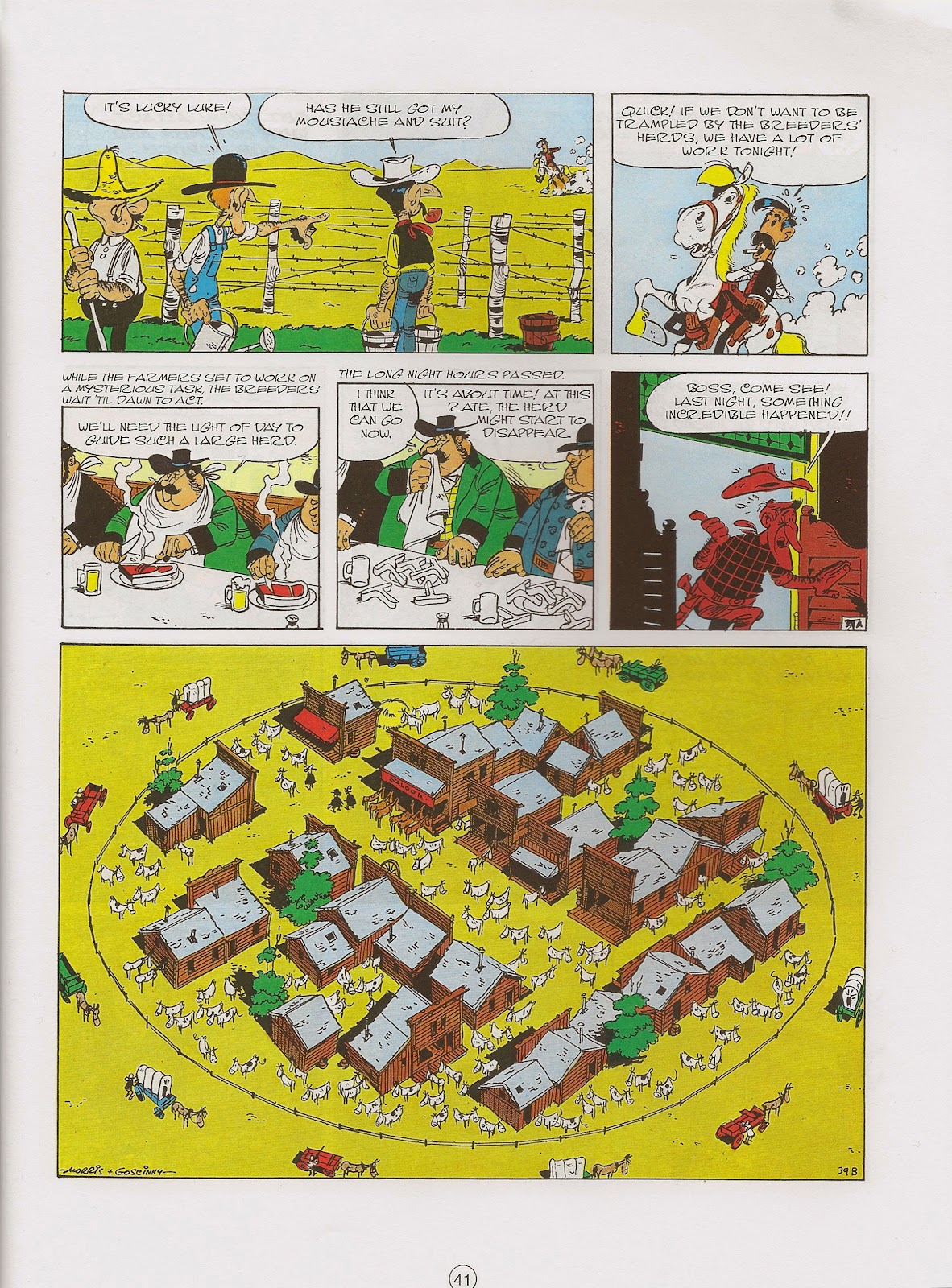
We're putting the finishing touches on our article "Literary Barbed Wire: Stretching and Cutting Barbed Wire from The Wire Cutters to 'Brokeback Mountain.'" Scanning a page from the comic book about Lucky Luke's adventures with barbed wire on the prairie (a French series that we have in translation), I remembered our French friend Celine who said she had read the whole series when she was a girl. Looocky Loooke, she said, and blushed a little when we pointed out the first name had to do with luck.


Tuesday, April 24, 2012

Brian Evenson's Dark Property


On May 1, Open Letters Monthly will publish an essay of mine called "Affliction Fiction." In it I review Brian Evenson's two new books in the context of the rest of his work.


As the essay developed, I cut pieces and added other pieces. A few of the cut sections here:


I watch eagerly for new books and stories by Brian Evenson. He’s got a wicked sense of humor, on display recently in the stories “Bon Scott: The Choir Years” and “Niue.” Imagine the awkwardness that ensues after AC/DC singer Bon Scott is found singing surreptitiously with the Mormon Tabernacle Choir, or the comic possibilities in a story named after a tiny Pacific island nation that opens with this question: “And how is it that the brooding Johnny Hellspider, long having restricted his posts to two-word comments such as “You rock!” or “Satan lives!”, has suddenly become so loquacious?”
Evenson’s quickly expanding body of work has a darker side as well. When “The Brotherhood of Mutilation” arrived in the mail, for instance, the chapbook lay on my shelf unread. It requires a certain resolve and a reasonably stable state of mind to read Evenson’s more unsettling texts; and something about the title and the cover illustration destabilized my resolve. A few years later, I had no such trouble with Evenson’s Baby Leg, despite a white linen cover marked by blood-red prints from the author’s own hands. By that time I had also read and enjoyed “The Brotherhood of Mutilation,” expanded between handsome noir covers as the novel Last Days (winner of the American Library Association’s award for Best Horror Novel of 2009).
Given my sometimes conflicted relationship with these books, I’m left to wonder about my fascination with what I have come to think of as Evenson’s “dark property” (the title of one of his best and most disturbing books). The reasons I read and return to these books are multiple; but they generally have to do with questions of who I am as a creature of language. Brian Evenson’s work explores and plays with and sometimes eviscerates that creature.
. . .

Lest the notions I have perpetrated here about Evenson’s grim epistemology discourage prospective readers, I should note again that he is a superb humorist. “The Prophets” is an excellent example, a story surprisingly relevant today as Tea Party readers return to texts by Mormon Cleon Skousen and ideas advocated by Eisenhower’s Secretary of Agriculture and later Mormon prophet Ezra Taft Benson. The story is told by a Mormon named Verl who decides his Church has abandoned Ezra Taft Benson’s teachings and fallen prey to liberal ideas that threaten the whole country:
The way it was laid out to me, Ezra Taft was the last real President of the Church worth his salt. All the ones since him were liberals, people who the Lord had inflicted upon the Church for its wickedness. Ezra Taft, though, he was a good John Bircher who saw with a clear eye the importance of our Founding Fathers’ Constitution, not to mention the evils of the Federal Government. He saw like it was in broad daylight the conspiracy of the New World Order, and to top it off he supported gardening and self-sufficiency.”
So what to do? Verl drives to Idaho, steals a backhoe and digs up Benson’s corpse. Back in Utah, he tries to revivify the dead prophet, first with cosmetics and then with electricity. Insistent on the religiously constructed world he prefers to reality, Verl reads the subsequent disastrous events as meaning exactly what he wants them to mean and remains hilariously triumphant even as the physical laws of the universe run their relentless course.

Finally, a somewhat embarrassing personal revelation. I see myself as a sharp-eyed literary critic. I discovered the source for the Freemasonic conversations in Thomas Mann’s Magic Mountain and I was the first to notice that Rilke’s ten Duino Elegies hinge on an “ineffable site” preceded by 423 lines and followed by 423 lines. So when I realized that a one-eyed character in Evenson’s Last Days gazes at Kline’s missing hand with “eyes dilating,” I figured out I was on to something important. My musings on that singular/plural paradox can be found here (http://goaliesanxiety.blogspot.com/2009/03/paragon-and-paradox-brian-evensons-last.html ). 

More recently, rereading Evenson’s short-story collection The Wavering Knife, I stumbled on a mistake in “Moran’s Mexico: A Refutation, by C. Stelzmann” and began to congratulate myself again. “The only reference to a so-called Rodriguez in my grandfather’s original,” C. Stelzmann writes, “comes underneath a photograph entitled Tortilla bereiteren.” Aha! I thought. This should read Tortillabereiterin—the “in” means woman. I made a note in the margin, ready to send on the correction for the author’s next edition. Then I turned back to the story.

C. Stelzmann is the grandson of the author of a travel book about Mexico that has been appropriated by its translator Moran, a man C. Stelzmann calls a postmodernesco and whose intertextual “translations” he decries. By the second page, a reader discovers that the grandson’s refutation of Moran has been translated from the original German by a translator present in copious footnotes that systematically undermine the claims and abilities and even the sanity of C. Stelzmann. For instance: “C. Stelzmann, who seems to have no knowledge of animal husbandry, does not realize the animal photographed is a cow, a female, and thus not likely to search for a wife”. Even as I chuckled at what unfolds as a literary-critical parody, I still plied my critic’s tools, counting up the degrees of linguistic remove from the original Mexico: 1) A. Stelzmann’s account, 2) Moran’s “translation,” 3) C. Stelzmann’s refutation, 4) the translator’s text and notes, 5) my notes on the mistakes in the German. Number five brought me up short. C. Stelzmann and the translator are both laughable characters, all too certain of their certainties. And so am I. Evenson has sprung the trap.


Brian Evenson, Director of Brown University’s Literary Arts Program, has produced a remarkable body of work over the course of fifteen years. There are novels and separately published novellas: Father of Lies (Four Walls Eight Windows, 1998), Dark Property (Black Square Editions, 2002), The Brotherhood of Mutilation (Earthling, 2003), The Open Curtain (Coffee House Press, 2006), Last Days (Underland Press, 2009), Baby Leg (Tyrant Books, 2010), and Immobility (Tor Books, 2012). There are three science fiction novels published under the name B. K. Evenson: Aliens: No Exit (Dark Horse Books, 2008), Dead Space: Martyr (Tor, 2010), and Dead Space: Catalyst (forthcoming from Tor, July 2012). There are books of short fiction: Altmann’s Tongue (Knopf, 1994; reprinted with the addition of an O. Henry-winning story by Bison Books, 2004), The Din of Celestial Birds (Wordcraft of Oregon, 1997), Prophets and Brothers (Rodent Press, 1997), Contagion (Wordcraft of Oregon, 2000), The Wavering Knife (Fiction Collective 2, 2004), Fugue State (Coffee House Press, 2009), and Windeye (Coffee House Press, 2012). There are translations: Rafael Cadenas’ The Space of Silence (with Trenton Hickman, Pyx Press, 1995), Jacques Dupin’s Giacometti: Three Essays (with John Ashbery, Black Square Editions, 2003), Jacques Jouet’s Mountain ® (Dalkey Archive Press, 2004), Cristian Gailly’s Red Haze (with David Beus, Bison Books, 2005), Claro’s Electric Flesh (Soft Skull Press, 2006), Jules Romains’ Donogoo Tonka (FORuM Project, 2009), and Manuela Draeger's In the Time of the Blue Ball (Dorothy Project, 2011). And there are introductions to books, essays, and even a literary-critical book, Understanding Robert Coover (University of South Carolina Press, 2003). Evenson’s work has been translated into French, Spanish, Italian, Japanese, and Slovenian.

Saturday, March 24, 2012

ABSTRAKT BILDEN

Gerhard Richter, Abstraktes Bild

Gerhard Richter, Abstraktes Bild

Gerhard Richter, Abstraktes Bild


On a slow Saturday, inspired by flowerville's post on slowness and form, I turned to a poem by Robert Hass we discussed in our "Standing as Metaphor" class Thursday:


Time and Materials

Gerhard Richter: Abstrakt Bilden

1.

To make layers,
As if they were a steadiness of days:

It snowed; I did errands at a desk;
A white flurry out the window thickening; my tongue
Tasted of the glue on envelopes.

On this day sunlight on red brick, bare trees,
Nothing stirring in the icy air.

On this day a blur of color moving at the gym
Where the heat from bodies
Meets the watery, cold surface of the glass.

Made love, made curry, talked on the phone
To friends, the one whose brother died
Was crying and thinking alternately,
Like someone falling down and getting up
And running and falling and getting up.

2.

The object of this poem is not to annihila

To not annih

The object of this poem is to report a theft,
     In progress, of everything
That is not these words
     And their disposition on the page.

The object o     f this poem is to report a theft,
     In progre          ss of everything that exists
That is not th          ese words
     And their d           isposition on the page.

The object     of    his poe     is t     epro     a theft
     In     rogres     f  ever     hing     at     xists
Th     is no     ese     w rds
     And their disp sit on o     the pag

3.

To score, to scar, to smear, to streak,
To smudge, to blur, to gouge, to scrape.

“Action paint,” i.e.,
The painter gets to behave like time.

4.

The typo would be “paining.”

(To abrade.)

5.

Or to render time and stand outside
The horizontal rush of it, for a moment
To have the sensation of standing outside
The greenish rush of it.

6.

Some vertical gesture then, the way that anger
Or desire can rip a life apart,

Some wound of color.


In class we talked about the mundanity of the layers with which our days are steadied. Richter paints layers on layers as he "creates abstractly" (abstract bilden). The poet pulls us out of the meanings of the sentences to the form of the words on the page by abstracting. His abstraction in words, like Richter's abstraction in layers of scored and smeared and painfully abraded paint, renders time.

We talked about the word "render," which means both to create and to break down. The painter and poet who render time create a nunc stans, standing outside the greenish rush of time. Hass's sentences are broken out of time. They cease to flow. They stand there, in part 2, with a vertical slash cutting through the one quatrain.

Anger or desire. Some wound of color or of print. And wounded, we fall down and get up and run and fall and get up.

We order it, it falls apart,
We order it again, and fall apart ourselves.
Rilke, 8th Duino Elegy

Or this morning, on the cusp of Spring, Winter still present but fading quickly, walking easily with cat and dog, pulling out my little camera to take pictures of the last snow, of the mats of plants the snow left, of the very first wildflowers, it felt like I was standing outside—poised just before—the greenish rush of time and of the plants that will vault us into the chirping and buzzing and sap-rising Spring.

And as my mind moves, as it will, from thought to thought, I remember Zarko's email about his friend in Cologne, the artist Norbert Arns, who was in Corinna Belz's fine film of Gerhard Richter painting, and who himself had a recent show in Cologne with the title (Quit Hitting Me With My Handke): HÖR AUF, MICH MIT MEINEM HANDKE ZU SCHLAGEN

[for more of Gerhard Richter's work and information about him, click HERE]

Thursday, November 18, 2010

Dreamland, A Collaboration between an Author, an Artist, and a Book Designer

Drawing by Alice Leora Briggs

[This essay appeared in the Summer 2010 issue of The Bloomsbury Review]

DREAMLAND: The Way Out of Juarez
Text by Charles Bowden
Drawings by Alice Leora Briggs
Book Design by Kelly Leslie
University of Texas Press, 2010

by Scott Abbott

DREAMLAND’s final D has been turned in on itself, leaving REAMLAN crowded between the fat bellies of the D and its reverse image. And with that marriage of word and image a major theme is set: truth and its mirror, the mirror this book attempts to be, a book made like no other book because all other books about contemporary Juarez are simply not up to the task.
Dreamland tells a sordid story:
In June, a DEA informant called Lalo was caught with about a hundred pounds of marijuana. . . . Juanita Fielding of the U.S. Attorney’s office had the charges squashed because of an ongoing cigarette smuggling case by ICE (Immigration and Customs Enforcement) that employed Lalo as an informant. On August 5, Lalo tortured, killed, and buried a man in a condominium in the city on the other side of the river. By January 14 the next year eleven more people went into the backyard of the condo, and at least one of them was an American resident alien. U.S. agencies knew Lalo was killing and did nothing lest they jeopardize the cigarette smuggling case. Or they knew of the killings and did nothing because they were trying to penetrate a cartel. The explanations varied as the dead came out of the ground. (9)
Lalo was once a cop. He worked for a local cartel. He hired state policemen for the cartel. He worked for the DEA and ICE. One day he got a call. He arrived at a meeting with his cell phone still on. He bought supplies for the murder. He and two state policemen went to the death house. A lawyer named Fernando arrived, hoping to arrange for a shipment of marijuana to cross the border. He was slowly smothered, hit on the back of the neck with a shovel, dumped in a hole behind the house and covered with lime. ICE recorded everything they heard through the phone, wrote parts of it into a memo. Not all the parts. After two DEA agents were almost killed, the DEA began an investigation of the house. What they found didn’t jibe with the ICE memo. Trouble brewed. The silence that inevitably ensued ended the trouble, especially after the twelve bodies were exhumed and a plaque was erected and justice was done.
As gruesome as the tortures and murders were, this is no aberration from a lawful norm, Dreamland tells us. The death house and its successors are the straightforward solution to the problem of how to enforce order in the drug business. And death, of course, is not enough. Dying slowly by torture in the death house is the sufficient deterrent. That has become the new order of things. Even where plaques are erected and justice done.
Charles Bowden has been writing about Juarez and the U.S./Mexican border for several decades, and each successive book has revealed his ongoing obsession with finding adequate forms though which to think about the border city. Juarez, A Laboratory for the Future (1998), for instance, combines essays by Bowden, Noam Chomsky, and Eduardo Galeano with full-page photos by Julian Cardona and other Juarez photographers. Down by the River continues to explore narrative possibilities (“This book is the archeology of a nightmare”; 2002), as do A Shadow in the City (“That is what this book is about. Getting to that place”; 2005) and Murder City (“She understands. And soon I think I will if I am given enough time on the killing ground,” again with photos by Julian Cardona; 2010).
Like Bowden, Alice Leora Briggs has a history of experimentation with form, especially forms related to torture, death, and suffering, aspects of the Western artistic tradition visible in any Italian cathedral, she notes. Her drawings depict scenes as conflicted and complex as the story Bowden tells: a vicious medieval flaying being filmed by one man while another mows his grass behind, or a classic pieta besieged by a photographers, or iconic phallic Breugel wedding guests dancing above a man in a hairnet cooking menudo for the inevitable hangovers.
            Bowden has written what amount to a series of short essays on the theme of contemporary Juarez and the death house at its center, essays that wrench apart our usual sense for how the border city is ordered and disordered. His fragmented narrative works much like Briggs’ drawings that are related by themes of violence rather than by a through story line. And the third contributor to the book, its designer Kelly Leslie, has woven Bowden’s essays and Briggs’ drawings into a bookish textile so textured, so graphic, so thoughtful, that a reader forgets the usual neat divide between words and images and can no longer imagine why a writer would not work with pictures or an artist with words.
What kind of book is this experiment in form? It is not a graphic novel, nor is it an illuminated manuscript. It’s not an exhibition catalogue with accompanying essay. It can’t be Blake’s Jerusalem, because this is twenty-first-century Juarez. And although images and words are related by a sort of dream logic, it is not Jung’s Red Book either. Leaving the question of classification aside, there is still the question of how to read the book.
At some point, I realized I was responding to Dreamland as I do to jazz. This book requires attention, simultaneous attention, to the complex interactions of several voices improvising on the basis of a given set of chords or themes.
Given his preternaturally deep voice, his belligerent insistence on the world as he sees it, and his remarkable ability to create new forms, we’ll assign Bowden the Mingus bass. Briggs is the Monkish piano player, knifing through the black India ink to the white ceramic clay of her scratchboard-on-panel sgraffito drawings, improvising thematically on Renaissance tunes. The designer Kelly Leslie is the drummer Billy Higgins, establishing crazy-like-a-fox rhythms over which Bowden’s text and Brigg’s images trade twos and fours throughout the book. Finally, the informant identified as Lalo is the singer, having played previous gigs with drug cartels and ICE alike, singing turncoat testimony here like the mirrored canaries with which Leslie backs his words.
A Rilke epigraph establishes the chord changes these book musicians will play, a tune from the Seventh Duino Elegy (in A. Poulin, Jr.’s translation): “Each slow turn of the world carries such disinherited ones. . . . This shouldn’t confuse us; no, it should commit us to preserve the form we still can recognize. This stood among men, once, stood in the middle of fate, the annihilator, stood in the middle of Not-Knowing-Where-To, as if it existed, and it pulled down stars from the safe heaven toward it.” On the same page as the Rilke quotation, a drawing pronounces an eternal round: the archetypal Ouroboros devouring its own tail, its body curved around the words “La Cadena Que No Se Corta THE UNBROKEN CHAIN.” Like Bowden, Briggs is a hopeful cynic, a believer in order with a keen eye for lies about order; and her serpent in this case is a dead rat.
            The musicians insist, as does the book’s title, Dreamland: The Way Out of Juarez, that should someone find the true order of the chaos of the border city (and that order may be structured like a dream), the discovery might enable a truthful search for a way out of the current state of affairs. Otherwise, the way out of Juarez is through the house of death in which an ICE informant and Juarez policemen kill for the drug cartel that pays them. This is serious music.
Briggs configures. Bowden describes. Leslie lays down the rhythms. Lalo squeals. “Strange Fruit,” they sing, “Fables of Faubus.”
The problem, they tell us, is NAFTA and the subsequent job losses in Mexico. The problem is that people have no way to make a living. The problem is that working in the narcotics industry is the answer to the problem. The problem is that narcotics are illegal, which makes them the answer to the problem of a local economy foreclosed by the US (corn) and China (manufacturing jobs). And, fundamentally, Bowden writes, the problem is language:
One city is called El Paso, the other Juarez. One state is called Texas, the other Chihuahua. One nation is called the United States, the other Mexico. I find it harder and harder to use these names because they imply order and boundaries, and both are breaking down. So I stumble and try not to say these names even though they have meaning, at least some meaning, left, and they are right there on the maps and road signs. But they have the feel of the past, of dust and ruin and dead dreams. And so I say them at times, but often I struggle to find a way around these words because uttering them or writing them down contributes to a big lie and helps trap people in a dying world. (6)
            But I always stall at this point, my tongue gets thick, words are difficult to utter. My mind races and yet speech ceases. . . . I try to form a single word that captures what I am seeing and feeling and thinking. Finally, it comes out, to be sure it comes almost as a whisper. But still it comes. Dreams. (10)
            I must find a new language, one that avoids empty words like justice and crime and punishment and problems and solutions. (12)
            With wine, I do not hear the babble about humane borders, about worker permits, the screams of the murdered in the drug houses. . . . I must watch that temper. And keep my hands off guns. . . . And all I seem to hear are words and then, thank God again for drink, my senses open and the words disappear into the dictionaries where they lead safe and pointless lives. (64)
            This is the new geography, one based less on names and places and lines and national boundaries and more on forces and appetites and torrents of people. . . . . We have learned to live with the problem by lying about the problem. (139-140)
If the problem is language, the solution, if there is a solution, and there may be no solution, is language. The language of Bowden’s text. The language of Brigg’s drawings. The language of their complicated and horrific interleavings as Leslie works the drumheads of the pages with her designer sticks and brushes and mallets, with her digital mirrors and witchy magic. This book, in ways no book has ever done, probes the problem of Juarez and thus of the world’s future with an unlikely faith: “Two things stun me: how much I once believed and how much, despite the storm in the skies and the blood on the ground, that I still continue to believe” (1).
What does Bowden believe in? And Briggs? And Lalo? We’re left to find answers in the syntax Leslie creates with their images and words.
Listen to Bowden and Briggs improvising on the Rilke tune about preserving the form of the disinherited, and on one eternal ratround. Listen to their traded fours, to the one voice “comping” in that thoughtful form of jazz accompanying while the other voice solos, and then to the voices as they reverse the roles. And through it all, Lalo’s song.
Bowden takes the first solo.
Bowden: “There is a way out of here and it is called levanton, the lift or the pickup. You are going about your business and suddenly men with guns come and you go with them. Sometimes you return as a corpse, and this, of course, is a blessing.”
Briggs: A drawing of a seated man (it looks like Bowden) wearing a jean jacket, a large glass in his left hand, his hair wild and an even wilder look in his eyes. At his elbow a postage stamp, 1st CLASS, with Poseidon, perhaps, holding a triton while seahorses pull his chariot. “There is a way our of here,” the stamp proclaims, “it is called LEVANTON.” (2-3)

Bowden: “There is an order to things. At the crime scene, yellow tape defines the killing ground. . . There is an order to things. Everything works. The city lives two lives. One looks like order. One feels like decay. Both are the same place.”
Briggs: Firemen aim a hose at flames shooting out of a window. Below them a man reads a newspaper and another plays an accordion. Below them two men are drinking. To the left, a woman in Renaissance dress adjusts a machine in a laboratory. A postage stamp featuring a machine gun partially covers doubly mirrored hands holding spent shell casings. A second line of the hands and casings runs across the top of the page. (28-29)

Bowden: “The screams of the murdered are muffled by giant gags of duct tape. Giant hoses constantly wash the floor of the lab and tiny dreams and hopes wash down into grates and are carried off.”
Briggs: A naked Renaissance woman hoses off a carcass hanging in a row of carcasses. (30-31)

Bowden: “You make a list of absolutes, of touchstones. . . I know some things for certain. Nothing will stop people from coming north. Nothing will ease their pain. Nothing will stop the violence of the line. . . . I can’t decide if I am hearing the cries of a hard birth, or something more like a death rattle.”
Briggs: The naked legs and torsos of two people entwined.
Lalo’s song (and Leslie has pictured the words like redacted text in a government document, backed by a singing canary): “On another occasion Santillan mentioned to me that they killed a person who was one of his workers and who was called El Gordo, the Fat Man, and whose body appeared without a head.”
Bowden: “I hear a zim bam boddle-oo song in my head Li’l David was small, but oh my! He fought Big Goliath.”
Briggs: A postage stamp with a left hand crossing a right one over a piano keyboard. (40-42)

Bowden: “It’s a war with no generals and many privates. There is a new order in the wind and it looks like chaos but it is not. There is a new order in the wind and it sidesteps government, or, if pressed, steps on government. There is a new order in the wind and it cannot be discussed because any discussion might threaten the older order now rolling in the dirt.”
Briggs: “Birthday Greetings” says the postage stamp. A fat little Renaissance cupid sits atop skulls and plays with another. (60)

Bowden: “And it does not matter if the issue at hand is a truckload of dope, a death house winked at in Juarez by a U.S. agency, or a flood of poor people bumbling toward some promised land, still the response is the same, that the problem has a rational solution. I think otherwise. I think I am looking at the solution and it is agony under the sun, a body in a fetal position precisely five feet and seven inches below the surface of a backyard in a nice neighborhood.”
Briggs: A skeleton in fetal position.
Lalo’s song: “If they order to you, do this, you do it, and you’d better do it; and if you don’t do it, you get killed. . . . This first time, when I saw the killing, yeah, it – what can I do? Call the police? The police was already there.” (98-99)

Lalo keeps singing, Briggs takes the solo, Bowden comps.
Lalo’s song: “What was the Parsioneros house like? Didn’t it smell like crazy? No. . . . With bodies being drug underneath the staircase, blood – No, you prepare everything.”
Briggs: Two bodies on two cots in a morgue.
Bowden: “There is a belief by some that things are breaking down. This is false. There is a belief by others that things are getting better. This is false. Order depends on things staying the same. . . . There is no chaos permitted. There is only order, and order shackles all efforts at any other kind of life.” (102-103)

Briggs: A cropped version of the drawing of Bowden in a chair in a jean jacket holding a large glass in his left hand. Now there is only the hand and the glass. Where black ink formed utter darkness above Bowden’s torso in the first drawing, now hang a row of animal carcasses like the ones being sprayed by the naked Renaissance women in the earlier drawing.
Bowden: “He owes for a load and so they come and take him. He sits in a chair at a ranch. They are outside, drinking scotch, doing lines of cocaine. His partner is to come with the money. . . . For two days, the time passes this way. They sit outside. In front of him, a guy takes a sharp knife. A hog is strung up in front of him as he sits in his chair. First, the throat is slit. Then the belly is cut open and the guts spill out. It goes that way, hour after hour. Later, he says, you know, I thought I could wind up like that hog.” (114-115)

Briggs: A man (Bowden) stares into the distance, smoking, while a hanging carcass is butchered to the side and to the rear a naked man tied to a post is whipped by men dressed in Renaissance clothing.
Bowden: “And the point is this: we are creating poverty that exceeds the ability of the State to alter, we are creating violence that exceeds the violence of the State itself, we are creating lawlessness faster and over more territory than we are creating law. We must ask ourselves this simple question: Is the house of death the problem or the actual solution? Is this the freak show or the future? Are these men monsters or the coming human beings?”
And Lalo sings: How close did you get to Vicente Carrillo Fuentes? How close were you? No, not – not close. I never seen him. I didn’t know him. I never got close to him.” (116-117)

Briggs: A drawing shows a serious-faced man (Julian Cardona) sitting in front of a coffin on wheels, framed top and bottom with mirrored hands holding shell cartridges.
Bowden: “Small improvements could be made in this system. Decent wages paid by American companies in Juarez would lessen the violence and slow or end illegal immigration in that area, but this is impossible because the companies must compete with business in Asia. Legalizing drugs would destroy the cartel and end the cash flow into their hands of tens of billions of dollars a year, but this is impossible because American citizens would consume drugs without guilt. . . . Everything is impossible except the status quo.” (130-131)

Briggs: A version of Mantegna’s foreshortened “Dead Christ” lies stuffed under a steel-girded bridge and atop a set of pipes and vats that collect his blood.
Bowden: “Phrases will be altered and new words will be used for old pains. Still, it rolls on, the entire theater of dust and blood. . . . Most likely the body will show burn marks. The problem will be solved. Justice will be done. Business will not be bothered in an American city for a spell.”
Lalo’s song: “They will kill me or they will torture me and then will kill me. Who will? Yeah, the police, the cartel, the government, it’s all the same people.” (148-150)

After all the variations (thematic and chordal, Renaissance and contemporary, musical and visual, Mexican and American), the jazz quartet returns to the head, to the Rilke elegy whose persona pulls down order from the stars in the face of the annihilator.
Bowden: “The stars rise over Juarez and finally someone notices and feels the grace and peril of the night sky. That is what I think must have happened in these holes in the patio as the tortured men finally found the space in their hectic lives for the magic of the heavens.”
Briggs: Between doubled and redoubled rows of Friedr. Bayer & Co. Heroin bottles, an empty cab of a car, a starry night burning outside, and on the previous page slumps a bullet-riddled van. Then a short-haired man wearing a t-shirt and dark glasses steers his car through a starry night. The constellation Orion burns through his window. Is he whistling? (140-141 and 145)

Bowden, Briggs, and Leslie have stood, in the pages of this book, “in the middle of fate, the annihilator, stood in the middle of Not-Knowing-Where-To, as if it existed.” If it exists, that way out of Juarez, if it exists any way other than through the death house, it exists in these pages whose images and words may still be inadequate mirrors but don’t lie.
            As a final note, as a resigned yet resolute response to a book that questions many of my certainties and unsettles my very being, I’ll add my translation of another stanza by Rilke, this time from the eighth of the Duino Elegies: “We order it. It falls apart. We order it again. And fall apart ourselves.”