Showing posts with label walking. Show all posts

Tuesday, July 26, 2011

Barbed Wire, Jazz, Thoughts About Meaning and Life


Last night, while the Spanish Fork Rodeo came to its climax and Pioneer Day fireworks erupted across Utah Valley, I sat in front of my computer writing about the meaning of barbed wire. Gloria Anzaldua's poem about her existence as a border creature had me transfixed:

1,950 mile-long open wound 
dividing a pueblo, a culture,
running down the length of my body,
staking fence rods in my flesh,
splits me     splits me
me raja     me raja

This is my home
this thin edge of
barbed wire.

The Bill Evans Trio (Evans, Scott LaFaro, and Paul Motian) worked the changes of "Gloria's Step" in their first evening set at the Village Vanguard in 1961. They had played the tune in the first afternoon set and would improvise on its chords in the third evening set as well.

I thought how my life too has been lived in the dangerous, fecund borderlands whose competing cultures and languages Gloria Anzaldua sees as barbed wire.

What cultures? What languages?

LaFaro thought his way through a long solo, Evans commenting now and then, Motian laying down the path they're treading.

I looked up at my brother's footprints. They hang on the wall like an icon. Days before he died of pneumocystis pneumonia in Boise, John cut these shapes in a cardboard box. He lined his shoes with the cutouts, the shoes he wore while cooking at the T & A Cafe, the grease-spattered shoes whose soles had cracked across.

John lived in borderlands of his own.

I lined the shapes of his feet with large postcards Zarko gave me the year I spent at the University of Tübingen working on my book about Freemasonry and the German novel. The postcards are themselves drawings of feet, done by Zarko's friend Miroslav Mandic who was walking from   the Slovenian home of France Preseren, an early 19th-century poet, to Tübingen, the home of Friedrich Hölderlin, a German contemporary of Preseren.

It was with Zarko that I first read Peter Handke: Der kurze Brief zum langen Abschied.

Last night I looked at the feet on the wall and wondered about the path of my life. What if John had not been gay? What if we hadn't grown up Mormon? What if I hadn't met Zarko? What if I hadn't found jazz? What if I weren't the father of Ben and Tim and Tom and Maren and Sam and Nate and Joe? What if I still believed in God?

I do believe. 

Just not in absolutes.

I understand the actor in "The Great Fall" who "worships" in the church he comes upon while walking. Meaning comes from form. Form comes from the hands of an artist. Repetition is meaning. The frame holds absence in the shape of feet over the representations of feet and walking. The Great Fall is from the first and second gentle walking. The Great Fall is out of and into language. Each step is a falling caught by a foot and then by the other foot. Walking is falling and standing. Life is walking.




Wednesday, July 20, 2011

Peter Handke's "The Great Fall": Walking

Michael's latest comments about the book include some fine memories of walking.


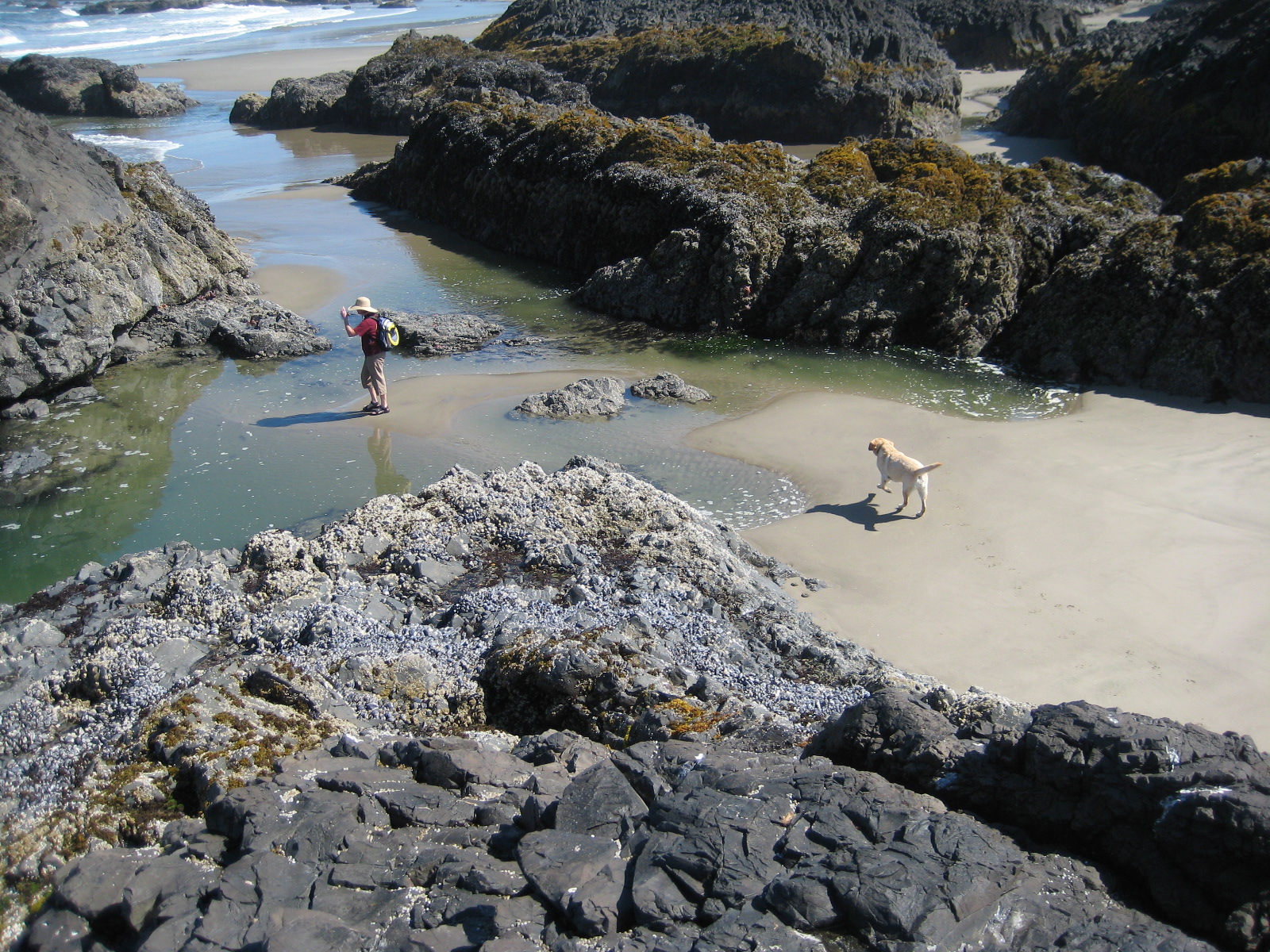
After a morning walking on the beach (sometimes backwards, but, minding Michael's advice, never backwards into a tidal pool), I've got my own memory of walking with Peter (published with Zarko's Vampire as Razumni recnik, or A Reasonable Dictionary, in Belgrade:


May 28, 1998, Bajina Bašta

We’ve had a hearty breakfast in Dušanka’s garden and are packing for a two-day hike on the Tara Mountain.

Peter carries the sturdy canvas pack used by one of the characters in his film Absence. He wears an old pair of high-topped leather shoes I imagine to be the same shoes featured in his story “The Shoeshiner of Split”:

In the following weeks, however, he wore the shoes in the snow of Macedonia, in the leafy dust of the mountains of Peloponnesos, in the yellow and gray sand of the Libyan and Arabic desert. And even months later, one day in Japan, it was enough to rub the leather with a cloth and the original shine from the promenade in Split reappeared, undamaged.

Žarko has a good nylon daypack and a pair of generic white athletic shoes. Zlatko, Thomas, and I carry our things in high-fashion vinyl shopping bags -- black-and-white, lemon-yellow, and pink bags supplied at the last minute by Olga. Zlatko and Thomas wear city shoes, black-leather low-topped shoes that are the antitheses of my heavy leather hiking boots.

What to note about the 35-kilometer hike? The wildflowers. The changing views of the Drina from ever-higher vantage points along the switchbacking road. The blind-worms copulating blindly on the roadside. The sunlit meadow where we lie in the grass to rest our weary feet and legs. The rare Serbian spruce Peter points out. The ski-resort inn where we re-hydrate. The serpentine logging roads. Peter’s ongoing search for mushrooms, which he stuffs into a compartment of Žarko’s pack. The desultory conversations. Our growing weariness. Žarko’s incipient and then pronounced limp. The moment late in the day when Peter picks up the pace and Thomas and I fight to match his strides while the other two fall back. The huge Tara Mountain conference and sports center swarming with sweat-suited volunteer firefighters gathered for a training session. The little roadside restaurant where the owner has been waiting for us.

While we eat a hearty dinner that includes the mushrooms Peter has picked, the restaurant owner tells us about the years he spent playing an accordion in Germany. After his back gave out, he says, he tried racing cars and finally came back to the Tara Mountain.

Sometime before midnight the racing restauranteur proves his prowess by speeding us up a winding road, leaving his slow headlights hanging in the trees at every tight corner, accelerating and braking, screeching and honking, torquing and turning to pull up abruptly at an A-frame cabin where we spend the night.