Showing posts with label Najib Niazi. Show all posts

Sunday, September 4, 2011

How to Tell a Story


I can't get Scott Carrier's voice out of my mind. Yes, the physical voice that resonates from the radio; and this morning the insistent voice that calls from the lines and paragraphs of "Prisoner of Zion."


How does he do it? How does Scott do his verbal magic?


There are answers in "Najibullah in America, Orem, Utah 2011."


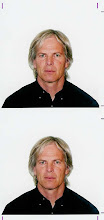
Najibullah Niazi, candidate for UVU President
The story begins with this sentence: "I first met Najibullah Niazi in Afghanistan in the late fall of 2001, at the beginning of the longest war in American history." 


Najib's name in its full form is the antithesis of the spare, even gaunt "I." It is unfamiliar, almost opaque to a speaker of English. Welcome to a foreign world; and by the way, this war is the longest American war in history.


Lesson #1: wed the unfamiliar with a matter-of-fact surprise (it was a surprise to me) and the story is launched.


"For the next three weeks, until I left the country, he was my guide and translator, the best I ever had. He could go anywhere and talk to anybody with charm and cunning. He could shape shift, and he could lie -- never to hurt anybody but only to get by and survive."


Lesson #2: a good storyteller lies, never to hurt anybody but for the good of the story, and does so with charm and cunning.


The story shifts from Afghanistan to Utah Valley University, to Najib's graduation. Both Najib and Scott are waring caps and gowns, for Scott is now at professor of communications at the university. This will be a double story, of Najib's accommodation to the U.S. system of education and of Scott's accommodation to the life of a teacher.


Lesson #3: good texts, like textiles, are woven of several threads. Not any threads, but of well-suited threads.


Scott quotes the tearful Mormon graduation speaker and concludes "This is where we ended up. UVU and the Mormons took us both in from the cold, but now Najib is getting out and I may be here to stay, at least for the time being."


[My own angry post about this graduation speaker and his assault on Najib and all non-Mormon participants in the graduation is here: http://goaliesanxiety.blogspot.com/2011/04/white-and-delightsome.html]


The story shifts back from the graduation to what Scott did to bring Najib to Utah when he was threatened for having been a translator for an American writer. The key to acceptance, Scott tells Najib, will be your story. It will show your fluency in English and your ability to do college work. 


"Three weeks later I got the first draft by email. It was barely readable -- full of misspellings, grammatical and syntactical errors, problems with punctuation and capitalization, and so on. Still, once you figured out what he was saying, it was an amazing story."


Lesson #4: good stories come from experience.


Najib then sent his story to me, at UVU, at Scott's suggestion, without changing a thing. Scott then writes that I "wrote back in less than an hour, saying 'We want him. Tell him he's accepted.'"


I did want him, but the "we" involved a counselor responsible for international students who acted quickly and knowledgeably on my recommendation and after Najib sent a fat package of materials related to his sketchy but impressive formal education, including lots of certificates from training he had done at the U.N. office where he had worked.


This kind of streamlining, stripping down, and conflating continues in the next paragraph in which Scott lays out the story of my move from BYU to UVSC and the development of the vibrant state university in a couple of sentences that get some of the facts wrong but that convey the creative energy of the place (I had nothing to do with the innovative "ethics and values" course, for instance).


Lesson #5: while a good story may be a lie, it should also be a mostly truthful lie and the lie should be in the service of the story.


The story continues, contrasting Najib's story at UVU with Scott's own. It is full of observations like this one: "Imagine a young Johnny Depp playing an exuberant Afghan refugee and you pretty much have Najibullah in America."


There's much more to the story, like the independent-study class Scott sets up for Najib so he can read and write about classic American writers in the service of learning how to write himself (Huckleberry Finn, Of Mice and Men, and Catcher in the Rye) but I'll end with the part where Scott is helping Najib conceptualize an essay about DADA for a class Alex Caldiero is teaching:


'Take out a pen and some paper and tell me, Who were the Dadaists?' I said.


Najib put his notebook in his lap and sucked his pen and said, 'The Dadaists were artists in Europe who thought art had too many rules and was boring, so they moved to Zurich in Switzerland where there were no rules about art.'


'Excellent,' I said. 'Write that down, just what you said.'


It took him about five minutes and when he read it back he'd completely changed the wording and it made no sense at all. . . .


'Look down at the river,' I said. 'Do you see any places where you could jump from rock to rock and make it across to the other side?'


'No,' he said, 'there is too much water.'


'Well, imagine there is a place like that. I want you to think about writing as like jumping from rock to rock. Can you swim?'


'Not very well.'


'Good. If you fall, you'll drown. In order to jump to a rock you must answer my question honestly in your own voice, not the voice of someone else. If you try to answer in someone else's voice, you'll fall into the river and drown. Do you understand?'


'Yes.'


'You've jumped to the first rock by telling me who the Dadaists were, now jump again and tell me, 'What did the Dadaists do?'


. . .


'The one called Duchamp took a toilet and turned it upside down to make people see it for its shape, not what it does.'


'And what do you think about that?'


'But what I think doesn't matter,' he said.


'So now you're in the middle of the stream and you're just going to stay there?' I asked. 'Will I have to call your father and tell him you were last seen in the middle of a river contemplating Dada? In order to keep going you have to say what you think, now, jump!'


Lesson # 6: If you want to be a good writer, find a mentor like Scott Carrier.

Saturday, September 3, 2011

Prisoner of Zion: "I needed a story, not satori"


 $6.99, I wrote in the previous post. Scott Carrier's "Prisoner of Zion" will be cheap as an e-book.


So I bought it. Unfortunately, I wasn't smart enough to make my mac's old operating system work with a free downloaded Kindle application from Amazon.


So I bought a Kindle: $139.


$139 + $6.99 = $145.99.


And now that I have read the book, it was well worth it.


"She was looking for enlightenment, prone to losing herself in the moment and falling in love with whomever we met, but I had a deadline and expenses and I needed a story, not satori."


"How can you live there?" [my friends] say, meaning, How can you live surrounded by religious fanatics? This makes me defend the Mormons, as they are much like people everywhere else -- some are bad, some are good. It doesn't bother me that Mormons believe God grew up as a human being on a planet curcling a sun called Kolob. I'm not upset when they tell me He came to Earth in a physical body and had sex with the Virgin Mary. These beliefs, as Jefferson said, neither pick my pocket nor break my bones."


". . . and now I was locked in jail with criminals, cells stacked three stories high in a semi-circle so that one guard, a woman, could sit at an elevated control panel in the center of the circle and see into every cell. . . . It was completely fucked up and I hated it, and I thought for sure the Hindu Kush would be better than this even if they killed me. I took solace knowing I was the only prisoner with a visa to Uzbekistan."


"'What do you you think about America?' 'It looks like a very nice place in the movies, but will you talk to someone and get us some medical help. My backbone is broken.'"


"They all have beards and wear pajamas, shalwar kameez, with a white pill box hat. They are Pastun, Afghans. . . . I've come to Pakistan to write a story for a men's fashion magazine. . . . I have a map and a backpack."


"The first time we saw Iron Cross it was kind of the same thing. We were in a [Burmese] coffee shop for tourists and they were on the television in a live performance. The sound was off, but it was clear they were into something loud and fast. The singer had a shaved head and was screaming into the microphone, the drummer was in a frenzy, and Chit San Maung -- who looked like a friendly head hunter -- was ripping through something dangerous on his guitar. We didn't need to hear the sound to know what the song was about -- sticking it to the man. It seemed very strange these guys were not in jail."


"I figured if he could show a competency in writing then I could argue, or suggest, that he didn't need a high school diploma. And yet I knew he'd learned English from watching American movies -- 'Rush Hour' and 'Rambo' -- and probably didn't have much experience reading and writing the langguage, so I expected that it would take a while to get him up to speed. But I knew he could do it because writing is mainly about the movement of the mind, and Najib's mind moved like a Ferrari."


Scott Carrier's mind moves like a striking rattlesnake, guided by the heat of the prey.


And the prey is the story.


There are lots of stories in this book, the first and the last in the form of haiku, the second and penultimate stories identical retellings of what I take to be an experience in Scott's youth where after church and and a lunch debating God's existence Scott's father is checking a restaurant bill while a man outside the window catches fire. In between are a fond introduction to Salt Lake's MOMOSPHERE that has been Scott's home since he was a child (you'll never see the Joseph Smith statue standing in Salt Lake's Joseph Smith Building the same way after reading this), tales of Elizabeth Smart and Brian David Mitchell, of belief in Pakistan and Afghanistan, of sex trafficking in Cambodia and rock and roll in Burma.


The stories are about very different topics, but they are threaded together by repeated motifs (the panopticon Scott finds himself in Salt Lake and the one he finds in Burma, the Afghan translator Najib who appears late in the book in an essay about his college experiences at UVU in Orem, Utah, etc.) and by the overarching theme of people held prisoner by their beliefs in Zion, a belief Scott describes as having to do with believing you are God's chosen people and that He gave your land to you.


The Taliban are Zionists by this definition, as are the Mormons. And so, for God's sake, is Scott Carrier himself, at least when fear of losing his girlfriend makes him try to control her or when he risks his life in an avalanche to prove he is right. The essay called "The Source of the Spell" is about Scott's own struggles to settle down, to buy a house, to make his girlfriend join him there. It's told in the context of Captain John Gunnison's attempt to force Utes to bow to European-American power and the Captain's opposite impulse to let the Mormons continue on what he thought was a crazy path because he thought persecuting them would make them stronger. "So, I ask you," Scott writes, "what would happen if we left the terrorists alone? What if we pull our troops from their holy land and let them live like in the days of Mohammed? . . . If we're not afraid of terrorists, then they lose."


Who else in America can write like this?


I keep a print of this photo Scott took in the basement of a prison in Afghanistan on the wall of my office. 


[for more the sights and sounds that accompany Scott's essay that originally appeared in Harpers, click here: http://hearingvoices.com/webwork/carrier/afghan/]


It is beautiful until you look closely and realize you're seeing a waterlogged corpse. This man and the men who attacked him, this reader and the writer Scott Carrier -- we're all prisoners of Zion. It's important for me to remember this daily. And where is the prison? Scott answers the question with an epigraph drawn from the Book of Luke, 17:21: "The Kingdom of God is within you."


This is a profound book, profound because of its simplicity, profound because of its humor, profound because of the Mormons and Afghans and Cambodians whose words and stories live here, profound because of the raw wound that is Scott Carrier's tender soul, profound because of the supple sentences with which he tends that wound.


Saturday, April 30, 2011

White and Delightsome

Graduation yesterday at Utah Valley University. Although I skipped my own graduation ceremonies, figuring that what I had learned was enough for me, I have enjoyed attending the graduations of my own students, pleased to get to shake their hands and congratulate them and celebrate their hard work and accomplishment.

This graduation was one I'd been anticipating for over four years. When Najib Niazi arrived at what was then UVSC from Afghanistan, sponsored by Scott Carrier, for whom he had translated during the war, he brought me a chapan that looks a lot like the three chapans worn by the men at the left (photo from a Swedish blog). I told Najib that I would wear it when he graduated. Yesterday I wore the chapan as I lined up with my faculty colleagues in their colorful academic robes, proud of Najib and happy to see him wave and smile as he passed by the faculty with his fellow students.

The morning was spoiled by the graduation speech given by teary-eyed Dr. Robert C. Gay, CEO of Huntsman Gay Global Capital (and former colleague of Mitt Romney in Bain Capital).

We (and by we I mean the Atheists and Methodists and Muslims and Mormons and Buddhists and Catholics and so many others at our state University) were assaulted by a simpering millionaire who intimated that Africans do not treat children charitably and that they know nothing about service unless they are taught by the millionaire Mormon's Eagle Scout son. He said that the deviations of a secular world will lead us astray, that pitiful liberals at Harvard censored the printed version of Mother Teresa's commencement address about abortion as murder, that Jesus is the way.

I squirmed and cursed and wrote pointed obscenities in my notebook as I thought about Najib and his Muslim friends and family-to-be who were sitting in the audience.

While Mr. Gay pretended to be Mother Teresa, they sat there dumbfounded.

As did I.

Najib, please accept my heartfelt apology. Najib, this celebrated man, this captain of capitalism, this philanthropic Mormon, this man of power and wealth -- this man is simply uneducated.

Take your honors B.S. in Business, take your MBA, if that's what you choose, take the fine education that you already have, and make more of it than this man has. Huck Finn, whom you met and wrote about in the class with me and Alex and Scott, is a much finer model for a good life.

While you do that, charitable man that you are, I'll look into the world through the less charitable face of the man to the right of the photo and think angrily about the man who brought his shameful disrespect into our celebration.