Showing posts with label Yugoslavia. Show all posts

Friday, June 8, 2012

Voyage by Dugout, The Play of the Film of the War


PAJ, the Performing Arts Journal, just published my translation of Peter Handke's play about the disintegration of the multicultural federal state of Yugoslavia under intense and falsifying media pressures.


The translation began in Vienna on the night before the premiere of the play in the Burgtheater:


5 June 1999, Vienna
Žarko,
I have checked into the Pension Falstaff, just around the corner from Sigmund Freud's rooms in the Berggaße.
From the train into town I saw a hawk hanging over a hops field lined with brilliant red poppies and blue flax. Like a sleek NATO jet over a fruitful Yugoslav landscape.
While waiting for you and Anne to arrive, I’ll work on my translation of Peter’s Voyage by Dugout, The Play of the Film of the War, whose premiere in the Burgtheater we are gathering to witness.

6 June 1999, Vienna

This afternoon I walked down to the Danube. The bridges here have not been bombed. The Danube still flows toward Belgrade. And the Serbs I meet in Vienna are dealing with their stress the same way I do: by telling jokes.


Madeline Albright gives the Serbs an ultimatum: love or war! They take one look at her and decide on war.

        Later, in the city center, I stumble onto a Sunday-evening demonstration against NATO and for Yugoslavia. "NATO – fascistik, NATO – fascistik!” the crowd of maybe 3000 chants. I donate 200 Schillings to a humanitarian group and they give me a blue, white, and red Serbian flag in return. A Vienna policeman, pistol in his belt, leans against a post studying a book with the title: Learn Greek.

Back in my room, unable to sleep, I turn to my translation. I wish you were here Žarko, to compare notes. Peter’s prose is not easy to reproduce, nor are the word-images. How, for instance, did you translate “Fertigsatzpisse”? Pissing your finished, your modular sentences? Sentential piss?

At 10:30 I watch a pre-premiere report on Peter done for Austrian TV (ÖRF2). Peter’s crime, the reporter and his commentators agree, is that he is a “Serbenfreund,” a friend of the Serbs. Not good to be a friend of the enemy. Peter should have known better. It’s an old story: Jap lover, Kraut lover, Jew lover, Nigger lover, Serb lover.

I turn off the sentential piss and turn back to Peter’s play. Before midnight I’m out of paper. I write across the face of my travel itinerary. I fill margins. By one a.m., having exhausted all possibilities, I look through the cupboards and drawers in my room. The drawer of the night table opens to a Gideon Bible, in the back of which are ten blank pages. I decide the hand of God has provided and rip them out and continue translating till first light.

9 June 1999, before midnight, Žarko’s birthday

I ought to go to bed, but I'm still reeling from the events of the day. Several hours ago NATO and the Yugoslav Parliament came to some kind of agreement ending the bombing after 78 days.

And, I'm just back from the world premiere of Peter's "The Play of the Film of the War," directed by Claus Peymann. I’ve never attended the world premiere of a play of this magnitude; and I’ve seldom been this moved, this challenged, by a work of art.

Peter has filmmakers John Ford and Luis Buñuel in a Serbian town ten years after the war trying to decide how to make a film of the war. Characters who appear before the directors tell conflicting and complex stories as the play feels its way to questions about war and its aftermath. The really bad guys of the play, three "Internationals" who know all the answers, who dictate all the terms, who can think only in absolutes, appear on the stage as follows: "Three mountainbike riders, preceded by the sound of squealing brakes, burst through the swinging door, covered with mud clear up to their helmets. They race through the hall, between tables and chairs, perilously close to the people sitting there. 'Where are we?' the First International asks. 'Don't know,' the second answers. 'Not a clue,' the third says." 

American and European moralists, functionaries with no hint of self-irony or humor, absolutists who run the world because of their economic power – these sorry excuses for human beings were depicted this evening as mountainbike riders.

            Žarko, I said, Don’t you ever tell Peter I ride a mountain bike.

            No, he whispered, I’d never do that.

            The play drew on several incidents from our trip, including when Peter put his coat around the shoulders of the OSCE woman in Višegrad. After the performance, flushed with enthusiasm and insight, I told Peter how well he had integrated that real event into an imaginative play.

            “Dr. Scott,” he chided. “Always the professor.”


............. for a very interesting set of thoughts about the play, by early Handke translator Michael Roloff (Kaspar, The Goalie's Anxiety, etc.), click HERE

Wednesday, July 20, 2011

Peter Handke's "The Great Fall": Walking

Michael's latest comments about the book include some fine memories of walking.


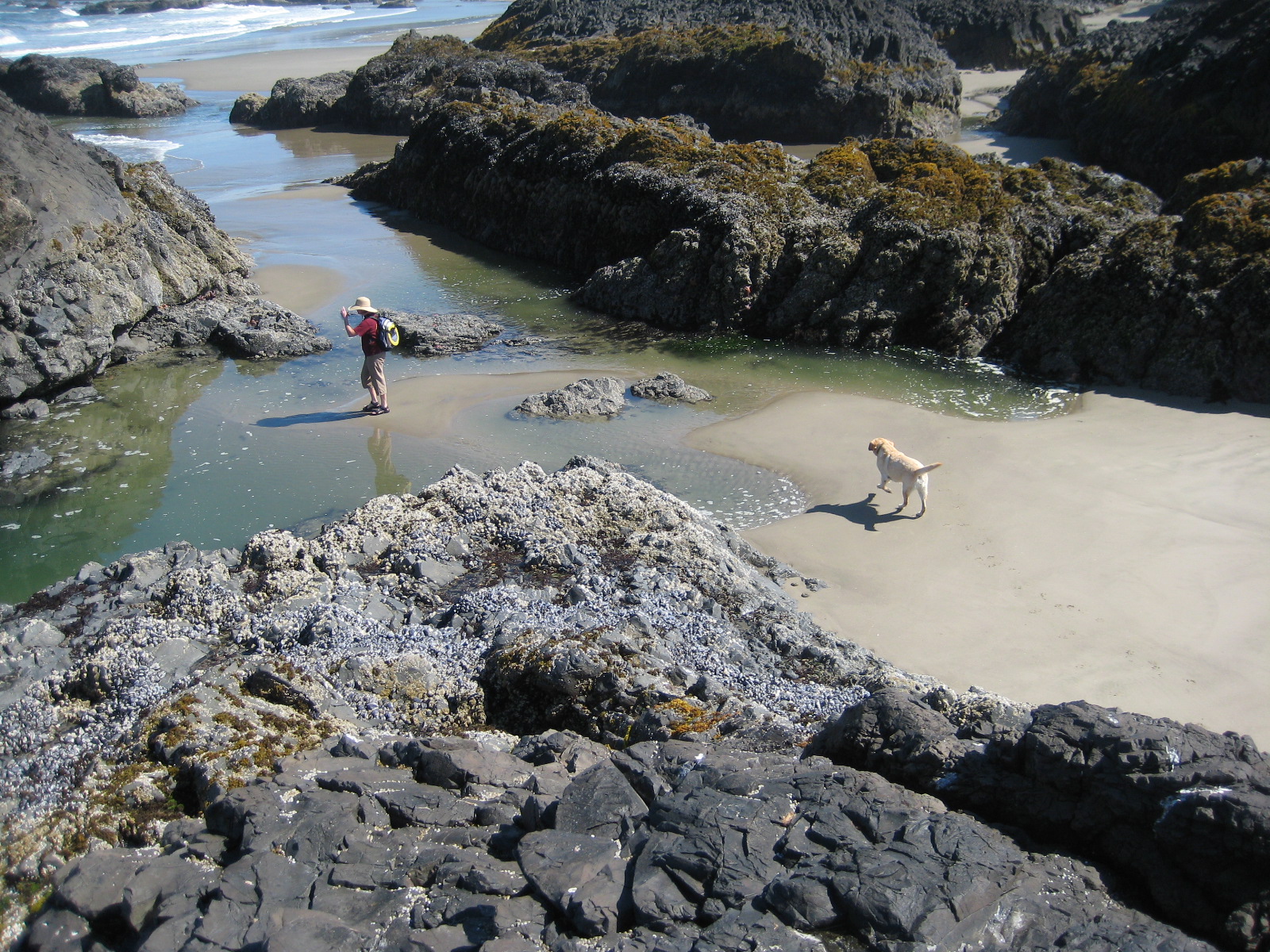
After a morning walking on the beach (sometimes backwards, but, minding Michael's advice, never backwards into a tidal pool), I've got my own memory of walking with Peter (published with Zarko's Vampire as Razumni recnik, or A Reasonable Dictionary, in Belgrade:


May 28, 1998, Bajina Bašta

We’ve had a hearty breakfast in Dušanka’s garden and are packing for a two-day hike on the Tara Mountain.

Peter carries the sturdy canvas pack used by one of the characters in his film Absence. He wears an old pair of high-topped leather shoes I imagine to be the same shoes featured in his story “The Shoeshiner of Split”:

In the following weeks, however, he wore the shoes in the snow of Macedonia, in the leafy dust of the mountains of Peloponnesos, in the yellow and gray sand of the Libyan and Arabic desert. And even months later, one day in Japan, it was enough to rub the leather with a cloth and the original shine from the promenade in Split reappeared, undamaged.

Žarko has a good nylon daypack and a pair of generic white athletic shoes. Zlatko, Thomas, and I carry our things in high-fashion vinyl shopping bags -- black-and-white, lemon-yellow, and pink bags supplied at the last minute by Olga. Zlatko and Thomas wear city shoes, black-leather low-topped shoes that are the antitheses of my heavy leather hiking boots.

What to note about the 35-kilometer hike? The wildflowers. The changing views of the Drina from ever-higher vantage points along the switchbacking road. The blind-worms copulating blindly on the roadside. The sunlit meadow where we lie in the grass to rest our weary feet and legs. The rare Serbian spruce Peter points out. The ski-resort inn where we re-hydrate. The serpentine logging roads. Peter’s ongoing search for mushrooms, which he stuffs into a compartment of Žarko’s pack. The desultory conversations. Our growing weariness. Žarko’s incipient and then pronounced limp. The moment late in the day when Peter picks up the pace and Thomas and I fight to match his strides while the other two fall back. The huge Tara Mountain conference and sports center swarming with sweat-suited volunteer firefighters gathered for a training session. The little roadside restaurant where the owner has been waiting for us.

While we eat a hearty dinner that includes the mushrooms Peter has picked, the restaurant owner tells us about the years he spent playing an accordion in Germany. After his back gave out, he says, he tried racing cars and finally came back to the Tara Mountain.

Sometime before midnight the racing restauranteur proves his prowess by speeding us up a winding road, leaving his slow headlights hanging in the trees at every tight corner, accelerating and braking, screeching and honking, torquing and turning to pull up abruptly at an A-frame cabin where we spend the night.

Tuesday, January 4, 2011

Biography, Celebrity, and Identity

Above: Peter Handke, Luc Bondy, and in the mirror, Malte Herwig
Below: Peter and I in the woods outside Chaville
I wrote earlier about Malte Herwig's new biography of Austrian writer Peter Handke, Meister der Daemmerung. In general it was a disappointing book, at least for me, in large part because it basically ignored the literary work and the ideas it manifests.

Since then, I've been struggling with some disquieting memories awakened by the book. This photo especially, reproduced in the biography, has had me squirming.
Here's the problem: the biographer sits opposite the writer and the director/writer Luc Bondy in a brasserie and photographs them. Repeatedly. You can see his head and little camera in the mirror behind the writers. This image haunts me with possibilities of my own stupidities. I too visited Peter Handke at his home in Chaville, outside Paris. I too had my photo taken with Peter during a long walk through the woods near his home.

It was exciting for me to talk with, to walk with a famous writer, a man whose work has been important to me as I've thought how I might best live my life. His dialectical, self-questioning, and powerful sentences, his ways of seeing the world through words, his thoughts about human beings as creatures of language are deeply important to me.

Years ago my friend Zarko interviewed Peter in Salzburg's Sheraton Hotel. The recording he brought back was full of stimulating and important and sometimes funny conversation (like when Zarko mentioned what a sensitive writer Peter is and Peter replied that "sensitive" is a word for condom wrappers). Later Zarko and I followed a character in Peter's novel Repetition across the Austrian border into what is now Slovenia, traveling also to the Tanzenberg school where Peter got an early education and then to his birthplace Griffen. We described ourselves (in the book Ponavljanje -- Belgrade: Vreme knijige, 1994) as giggling schoolgirls looking for a rockstar.

In that self-irony was a nervousness about what we were doing. If it was the work that was important to us -- and it was -- then why the biographical interest? Why the excitement that bordered on silliness?

Later we traveled with Peter up the Drina River, a trip that changed many things in my life. As I wrote about that trip (and here's a photo Zarko took of me writing notes while Peter seems to be thinking), I worried about myself as a possible sycophant, as someone who only has an identity through proximity to someone else.

Peter appears in my text, "A Reasonable Dictionary," but -- at least I hope so -- only because we were traveling together through war-torn Yugoslavia. He is not the focus of my story. Rather, I'm describing events that move me, that teach me, that transform me.

Zarko felt strongly enough about that same question that the text he finally produced to be paired with mine in the book Vampire + Razumni recnik (Belgrade: Stubovi kulture, 2008) doesn't mention Peter once.

The photo of Malte Herwig, however, bordering on the sycophantic, has reawakened fears in me. I try to counter them with thoughts of my work: I translated Peter's Journey to the Rivers, or Justice for Serbia and I have published a dozen articles about his work in various scholarly journals and books and encyclopedias.

Whatever the photos of me with Peter mean, whatever they reveal, aren't they firmly within the context of my scholarly work? Maybe not, and that's what has me worried.

Finally, for now, they're in the context of an event that leaves me as the butt of the joke, not as the image with camera in the mirror (at least I hope so):

9 June 1999, Vienna, before midnight, Žarko’s birthday

I ought to go to bed, but I'm still reeling from the events of the day.

Several hours ago NATO and the Yugoslav Parliament came to some kind of agreement ending the bombing after 78 days.
And, I'm just back from the world premiere of Peter's "The Play of the Film of the War," directed by Claus Peymann. I’ve never attended the world premiere of a play of this magnitude; and I’ve seldom been this moved, this challenged, by a work of art.
Peter has filmmakers John Ford and Luis Buñuel in a Serbian town ten years after the war trying to decide how to make a film of the war. Characters who appear before the directors tell conflicting and complex stories as the play feels its way to questions about war and its aftermath. The really bad guys of the play, three "Internationals" who know all the answers, who dictate all the terms, who can think only in absolutes, appear on the stage as follows: "Three mountainbike riders, preceded by the sound of squealing brakes, burst through the swinging door, covered with mud clear up to their helmets. They race through the hall, between tables and chairs, perilously close to the people sitting there. 'Where are we?' the First International asks. 'Don't know,' the second answers. 'Not a clue,' the third says."           
American and European moralists, functionaries with no hint of self-irony or humor, absolutists who run the world because of their economic power – these sorry excuses for human beings were depicted this evening as mountainbike riders.
            Žarko, I said, Don’t you ever tell Peter I ride a mountainbike.
            No, he whispered, I’d never do that.
            The play drew on several incidents from our trip, including when Peter put his coat around the shoulders of the OSCE woman in Višegrad. After the performance, flushed with enthusiasm and insight, I told Peter how well he had integrated that real event into an imaginative play.
            “Dr. Scott,” he chided. “Always the professor.”

Monday, April 20, 2009

Traveling and Writing

Good News!

Next spring (2010), Jan Wellington (English) and I will offer a class on Traveling and Writing. Jan told me about an online journal called the Literary Traveler that had published a fine piece of hers about Oscar Wilde traveling in the Wild West. I sent them something I had written about following a Peter Handke character into Slovenia, and today they published it as their feature article.

See it HERE.

Friday, July 4, 2008

Peter Handke's "The Moravian Night"


I just finished reading Peter Handke's "Erzählung" (story, narrative) and am filled with a wide range of emotions and thoughts. Peacefulness is the primary emotion, and a hightened awareness of the things around me -- my dog, the crackle of the buck's passage through scruboak outside my window, the rainsquall swooping down on the house from Loafer Mountain, the taste of the portobellos we just grilled.

The narrator of the story tells about a long journey through the Balkans, Spain, Germany, and Austria, a journey that brings him to places from Handke's life and into contact with characters from Handke's earlier works.

The story begins and ends on the Morava River just outside the town of Porodin in what is now Serbia. The narrator describes lambs grilled on spits -- and thus Thomas Deichmann's photo taken in Porodin, of Peter, Zarko, Zlatko's father who has grilled the lamb for us, and a younger me.

More about the ideas of the story another time.

What a pleasure it is to read.