|
| click on the image for a larger version |
Showing posts with label Tom Abbott. Show all posts
Showing posts with label Tom Abbott. Show all posts
Sunday, April 15, 2012
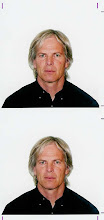
Tom's Jazzy Clarinet -- bottom right
Back from heart surgery, winter turns to spring, Tom in the Times.

Tuesday, January 31, 2012
Personal Music, Part 2
 |
| a photo of the 55 Bar from another night |
Yesterday afternoon, Tom and I and Kelsey's mother Easy loaded Bix into her car seat and headed for the city. Less than an hour later we were parked in front of the Lederhosen Bar, where Easy bought a container of goulash soup to take with us to Kelsey's gig at the 55 Bar (their website HERE).
Greenwich Village.
Just before we stepped down to the door of the place, I glanced to the right. The next-door neighbor is the Stonewall Inn.
Christopher Street.
Of course.
The 55 Bar, Tom explained, is located at the heart of much of the city's jazz scene. Just across the street is the Garage, which claims it has the most live jazz in the city (Tom's big band has played there). Half a block up another street is Arthur's Tavern, another jazz place. Not far is Fat Cat, where Tom has also played.
We settled in to some food and drink while Kelsey did her sound check. Several people came over to say hello to Tom, surprised he was up and out so soon. Remains a mystery to me: just 4 weeks out from valve replacement surgery.
And then the early show was on: Kelsey Jillette's American Project with guitar, bass, percussion, and Kelsey. [Along with other video's, including one from Tom's BigBangBigBand, there's a video of one song from last night HERE -- (to hear just the video, turn down the music playing to the left)] They started with an arrangement of Paul Simon's "Slipsliding Away" that almost eased me right off my seat. Kelsey's voice, especially in it's lower registers, is deadly.
The set continued; but Bix got a little too happy and I slipped her into her snowsuit and we slipslid out for a walk.
Around a few corners and a few more and there we were, approaching the bar again. Eight or nine guys standing in front of the Stonewall Inn looked us over and broke into big smiles when then they saw Bix's big eyes taking them in. "Ahhhhhhh" one of them said. "It's true," I said.
During the second set, Easy took Bix out while I enjoyed the music. And then it was 9 and the gig was done.
On our way past Arthur's Tavern Tom looked through the window and saw a saxophonist he recognized. We stepped in, he gave a big wave, and off we went, up the West Side to the Henry Hudson and then over the Harlem River to the Merritt Parkway and we were home in the other Greenwich Village.
Monday, February 21, 2011
Conflicting Thoughts/Feelings

The light, of course, has a lot to do with it. Coming now from well north of the desolate southern regress of the dark winter solstice, the sun's late-afternoon light on Loafer Mountain (see photo) reminded me that the sun had appeared from behind the mountain this morning at 8:30, rather than the 9:00 appearance of just a week ago.
More light! Goethe's last words. And my constant hope.
A thirty-minute bike ride this afternoon up Woodland Hills' steep geography landed me just in front of a snowboarder as he failed to land a jump he and his friends had created at the top of the highest road in the town. Nice jump, I told him as I rode past in my bike shorts.
Much of the day was spent productively. I'm working on a paper for the conference of the International Kleist Association called "Andere Umstaende: Erection as Self Assertion in Heinrich von Kleist's "Die Marquise von O. . ." The day's scholarly highlight came when I found this passage in Schopenhauer's "The World as Will and Representation," published just a few years after Kleist's story of a woman raped while unconscious who finds her way to a decent new life when she decides to stand up (the metaphor abounds) and abandon the society and family constructed according to a system that has no room for her:
"As an extensionless point," Schopenhauer argues, the present "cuts time which extends infinitely in both directions, and stands firm and immovable" (vol. 1, 280). He identifies this standing present (a manifestation of the essential in things, of will) with the "nunc stans of the scholastics" (vol. 1, 279). A person who wills to live in that present, desirous of an eternal recurrence of both joy and sorrow, "would stand," Schopenhauer writes, quoting Goethe's "Grenzen der Menschheit," "with firm, strong bones on the well-grounded, enduring earth" (vol. 1, 284). Schopenhauer says that such a standpoint (and he repeats the word "standpoint" [Standpunkt] four times), a living in the nunc stans, would arise if one were "clearly and distinctly oneself" (vol. 1, 285, 1818/19), that is, if one completely affirmed what he calls the "will-to-live."
 Light is good. Scholarly productivity is good. Lyn's potato and leek soup is good for dinner. And then, reading Mathias Enard's novel Zone while listening to my son Tom's new recordings with his Big Bang Big Band (tight, swung, thoughtful, and surprising -- like the Strayhorn and Ellington models), I'm struck by the creative process as essentially human, as necessary for humanity, as secular salvation in the face of a chaotic and often dangerous world.
Enard's protagonist, a conflicted product and producer of espionage and torture and war, is on a train from Paris to Rome. He spends the night passage thinking about his brutal, alcoholic life, about the bitter knowledge he carries in his briefcase, about family and lovers and comrades in war. He's no sweetheart, for sure. He reminds me, tonight, of aspects of myself, of traits and habits I wish weren't there. And -- surprisingly -- he represents aspects to which I aspire. What attracts me to this man, I think, is his honesty, his admitted frailty, the depth of his self awareness. And the beautiful bleakness:
“. . . nothing returns from what has been destroyed, nothing is reborn, neither dead men, nor burned libraries, nor submerged lighthouses, nor extinct species, despite the museums commemorations statues books speeches good will, of things that have gone only a vague memory remains. . . .”
He quotes Ezra Pound, what feels like holy scripture from a poet who was no saint:
To confess wrong without losing rightness: Charity
have I had sometimes, I cannot make it flow thru.
A little light, like a rushlight
To lead back to splendour.
Light. Even a little light. Exercise. Philosophy. Soup. Jazz. Introspection. Cynicism. The honesty to confess wrong without losing rightness.
Unbearably beautiful.
Thursday, January 13, 2011
The Blue Vipers of Brooklyn: Permanent Magic

Tom's a professional jazz musician. He makes a living playing with various groups, including the Drunkard's Wife, Lapis Luna, his own Big Bang Big Band, his wife's Kelsey Jillette Quintet, The Dreamland Orchestra (featured twice recently in the New Yorker) and The Blue Vipers -- check them all out in the internet.
Tom brought me the latest CD by The Blue Vipers of Brooklyn, a New Orleans-flavored group he has played with for several years -- in fact, when he drove from Utah to NYC a decade ago he made his rent money by busking in the subway, where he met Billy Nemec. Their recording, rough and early, called the "Henry Jones Swing Trio," is still one of my favorites.
After winning a street-musicians competition, what were now The Blue Vipers of Brooklyn used the prize to record a fine CD called "Forty Days and Forty Nights," the name from a Billy Nemec tune. Check it out at their website.
And now they've released (well, they'll release it in the next weeks -- the NY snowstorm kept the original release party from happening) Permanent Magic, a new album that carries on the band's eclectic and sometimes uneven but always gritty and creative and jazzy and lowdown tradition.
The album begins with a clarinet trill that announces a slow, easy, and haunting rendition of J. Myrow's Blue Drag. Nemec's New Orleans' flat, slack, and still forceful singing sets the tune off from other versions, including this one from the New Orleans Jazz Vipers [click here], which is a fine rendition, and this wonderful version by the Wiyos [click here], and the early version by the immortal Django [click here]. But the Brooklyn Vipers, for me at least, create a version of the tune beyond the others. It's partly because of Nemec's voice -- which I find off-putting and extremely attractive -- and partly because of the way the group works the tune, with voice and then a trademark double, entwined solo featuring Tom's lyrical clarinet and Sam Hoyt's intelligent and fanciful trumpet. Again and again on this and the earlier album, those two voices create a single/double voice I haven't heard anywhere else. The word "entwined" is an attempt to think the simultaneous solos that embrace each other sinuously, respectfully, delightfully. And then Nemec sings the slow drag, the blue drag, and I'm depressed in ways only the blues can accomplish, depressed and delighted at the same time.


When the Vipers release the album, buy it.
You'll love it. And that's not just a proud papa speaking.
Tuesday, December 18, 2007
Reflections

The stairwell of the Brooklyn Museum of Art. My eldest son Joe has found a window that gives his cell phone access to a signal. And I've found a striking double image: Joe and his shadow.
You see differently after you've been worked over by works of art. Shapes and colors become more vivid. Images more suggestive. Thoughts more graphic.
It was a family trip to hear Joe's brother Tom play his senior recital at the New School University in Manhattan. We stayed in Brooklyn, and spent a long afternoon exploring this museum, looking into artistic mirrors, surveying our souls.
 Here's Tim, for instance, taking a picture of himself in front of an ornate concave mirror. And Maren picturing an Egyptian artifact.
And I, of course, am making images of the children who are, in part, images of myself.
We walked from painting to painting, exhibit to exhibit, and I found myself the eager parent, anxious to teach my children everything I know, and equally anxious to see things through their eyes.

And that brings me to teaching.
I have a lot to teach. Even a slow learner picks up a few things over 58 years. But what thrills me, still, about walking into a classroom, is what will come back. At the end of a class (or a stroll through the Brooklyn Museum with my children), I'm never the same person who walked in.

Subscribe to:
Posts (Atom)